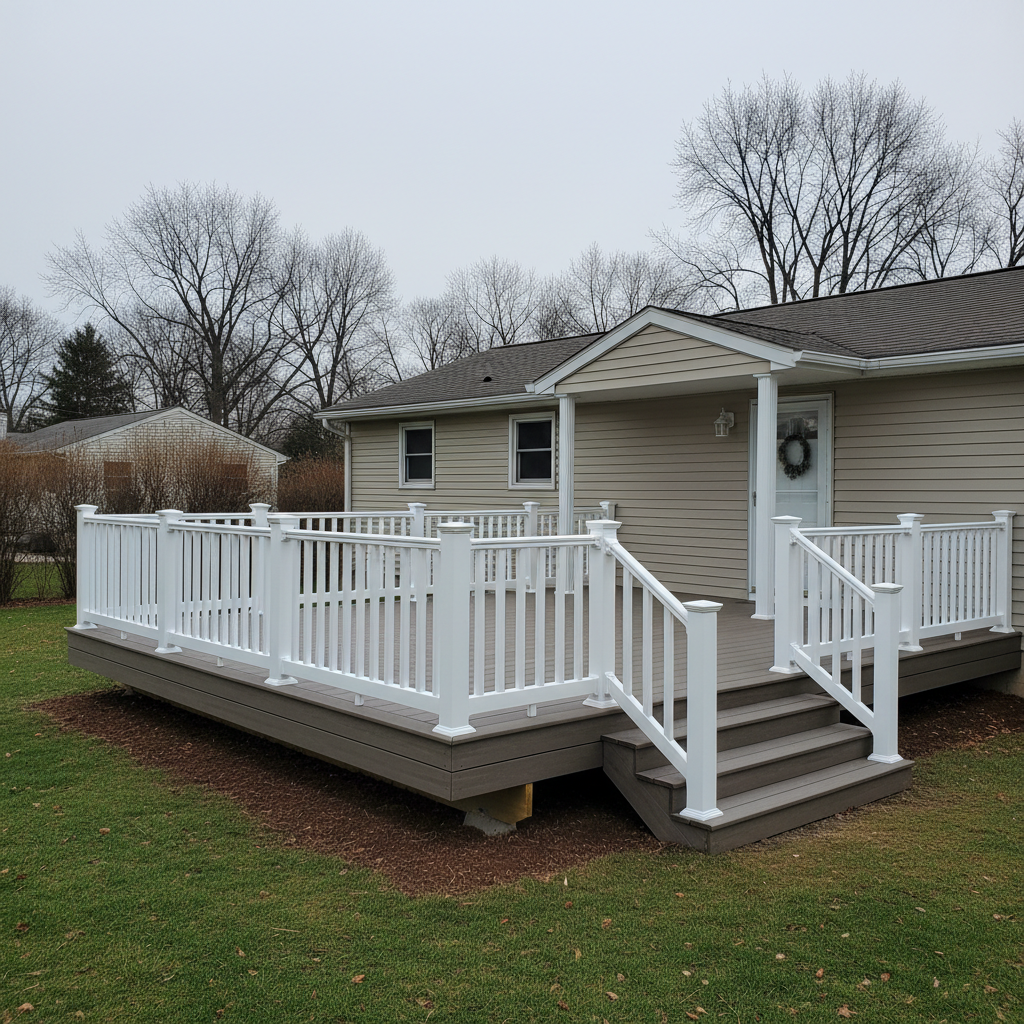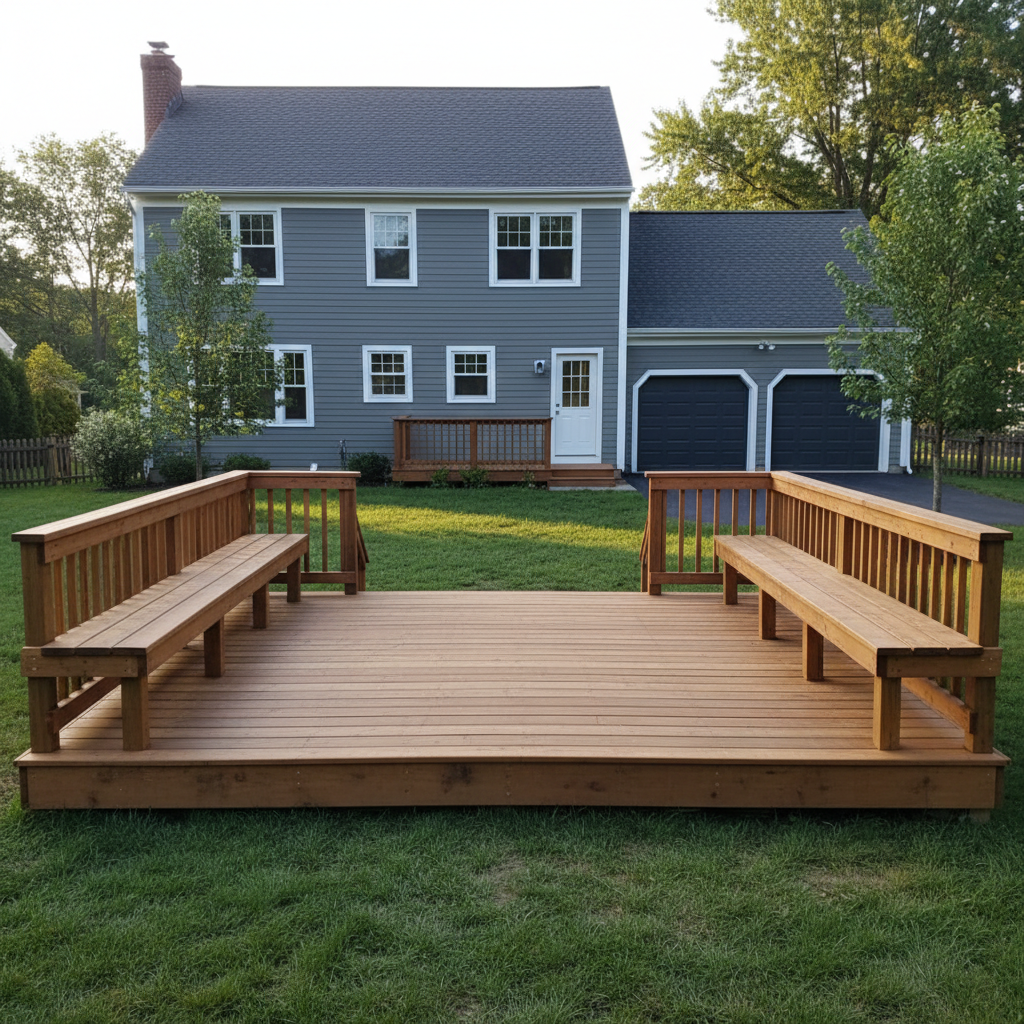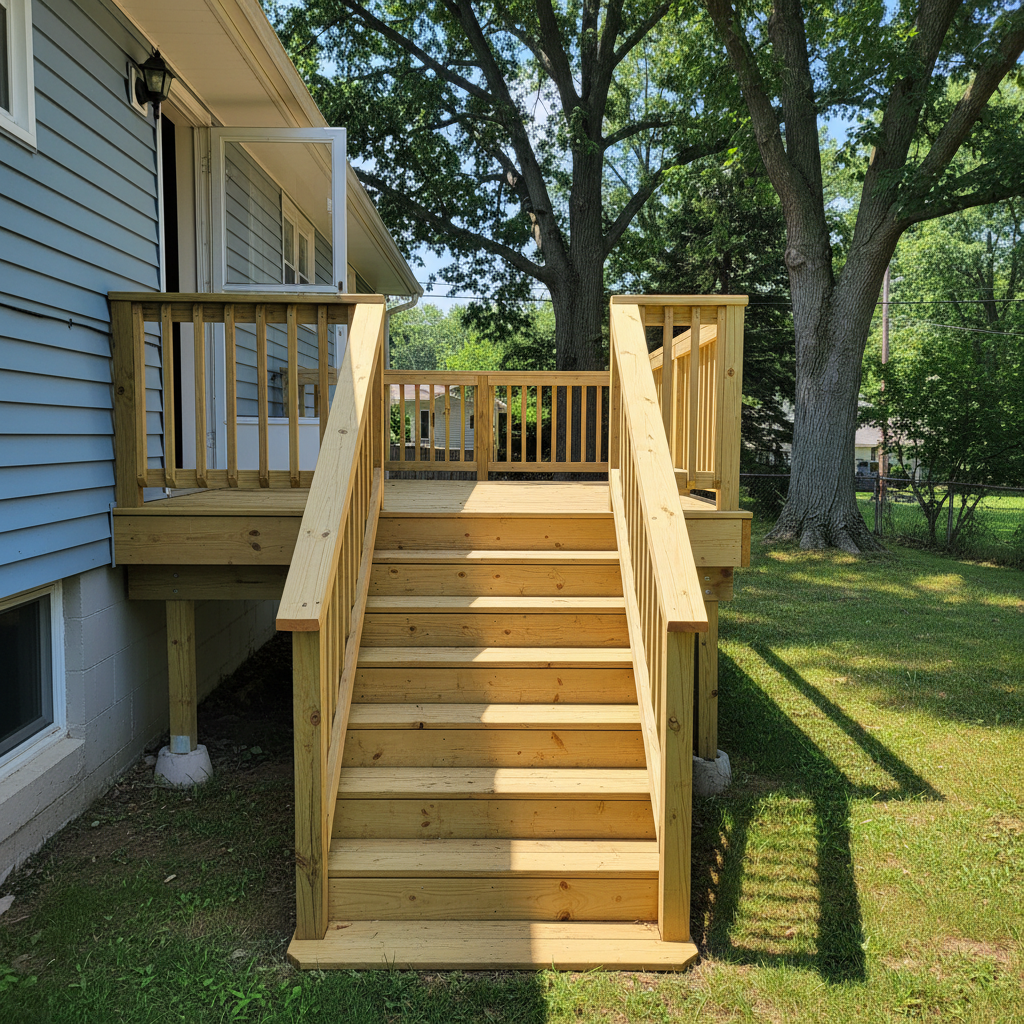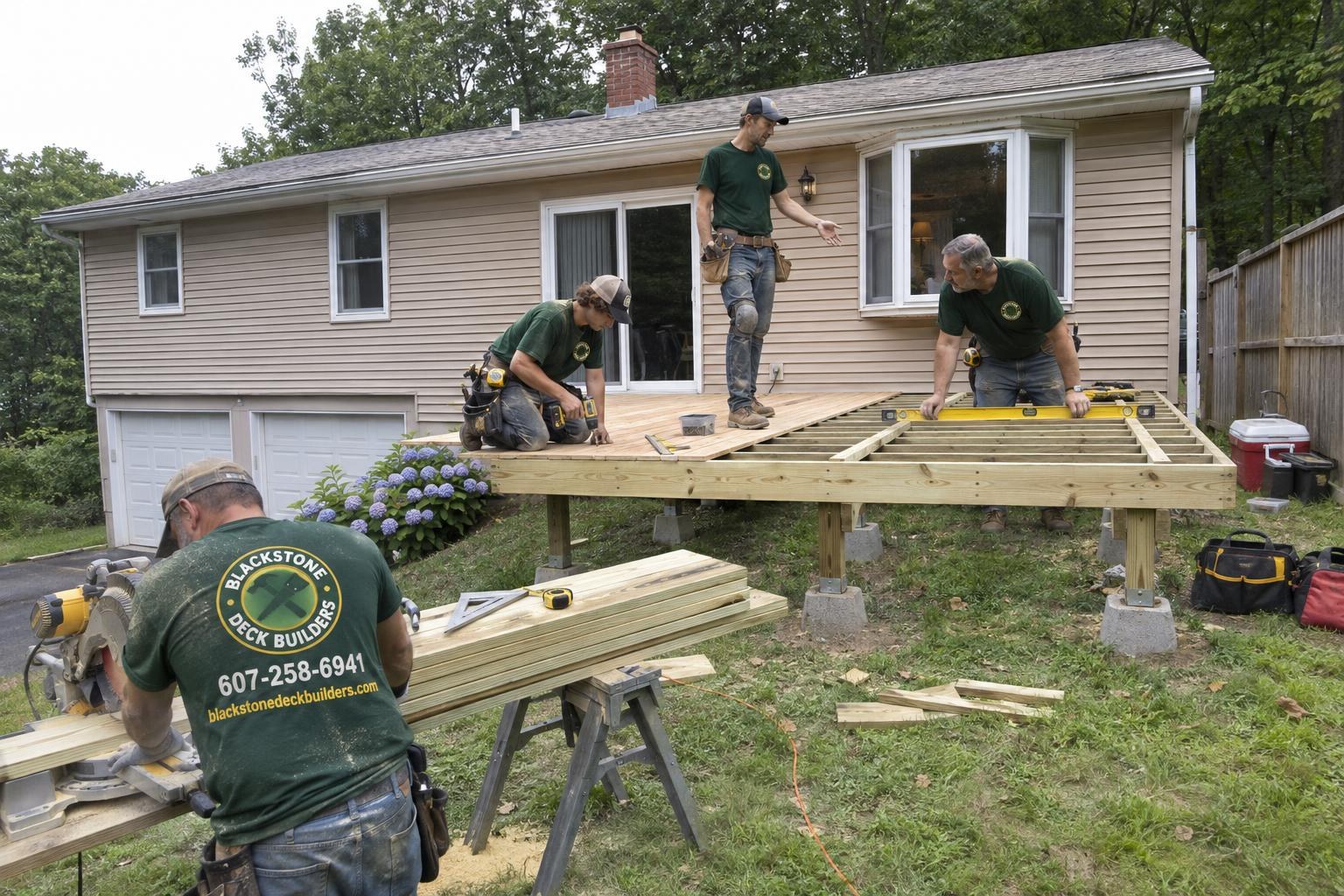
We build and fix decks, porches and outdoor stairs for homeowners around Vestal, and most of what brought us into this trade is pretty simple: we like building things that get used, not things that sit behind a fence as a showpiece. A deck gets rained on, snowed on, walked on barefoot and stood on at three in the morning when someone forgot their key, so it has to actually hold up.
If you're on this page, there's a decent chance a board's gone spongy, the railing moves when you lean on it, or the whole structure is just older than it looks safe. We check the framing before we touch the surface, because a new coat of stain over a rotted joist just hides the problem for another season. What decides whether a deck's still solid in five years is almost always what's underneath the boards, not the boards themselves.
None of this is complicated. It is mostly just doing what we said we would do.
We're licensed and insured for deck construction, and we'll show you proof before we ever set foot on your property. If a load-bearing post needs a footing inspected, we handle that paperwork instead of leaving it to you.
Most towns around Vestal require a permit for anything attached to the house or more than 30 inches off the ground, and we deal with that filing directly. We've been through the inspection process enough times to know what the inspector checks first.
Every quote lists the decking material, the fasteners, the footing depth and the labor as separate line items. That way if you want to swap composite boards for pressure-treated pine halfway through pricing, you can see exactly what changes.
We work with pressure-treated pine, cedar and composite brands like Trex and TimberTech, and we'll tell you honestly which one fits your budget and how much maintenance you're willing to do. A composite board costs more up front and skips staining entirely; pine costs less and calls for sealing every couple of years.
We're based in Vestal, and most of our jobs are within a short drive, in Endicott, Johnson City, Owego and the rest of the Southern Tier. That matters when a footing has to go down past 42 inches to clear the frost line here, something a crew from farther out might not budget for.
We've seen enough rotted ledger boards and heaved footings to know exactly where a deck fails first. We build so those spots don't become your problem five years from now.
Questions about who you'd actually be hiring.
Free estimate, a price in writing, and work we stand behind.