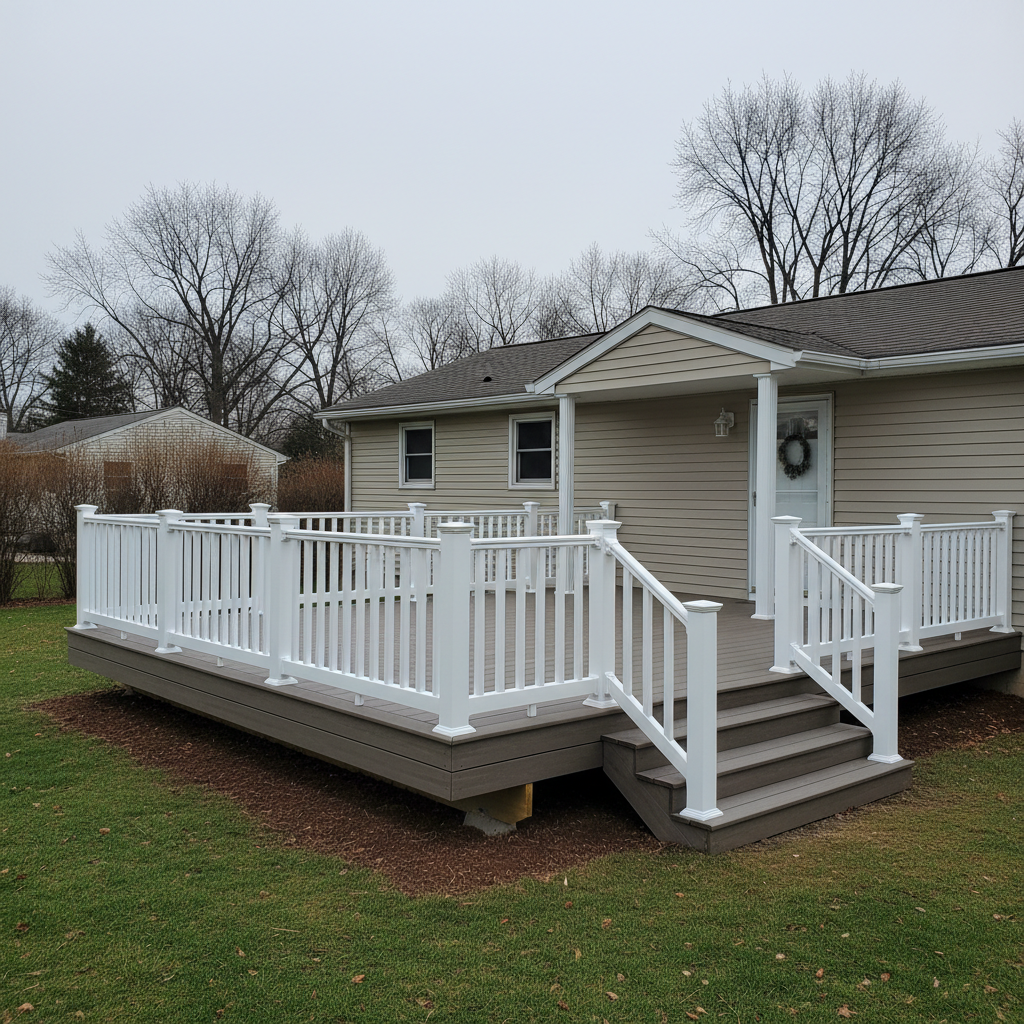
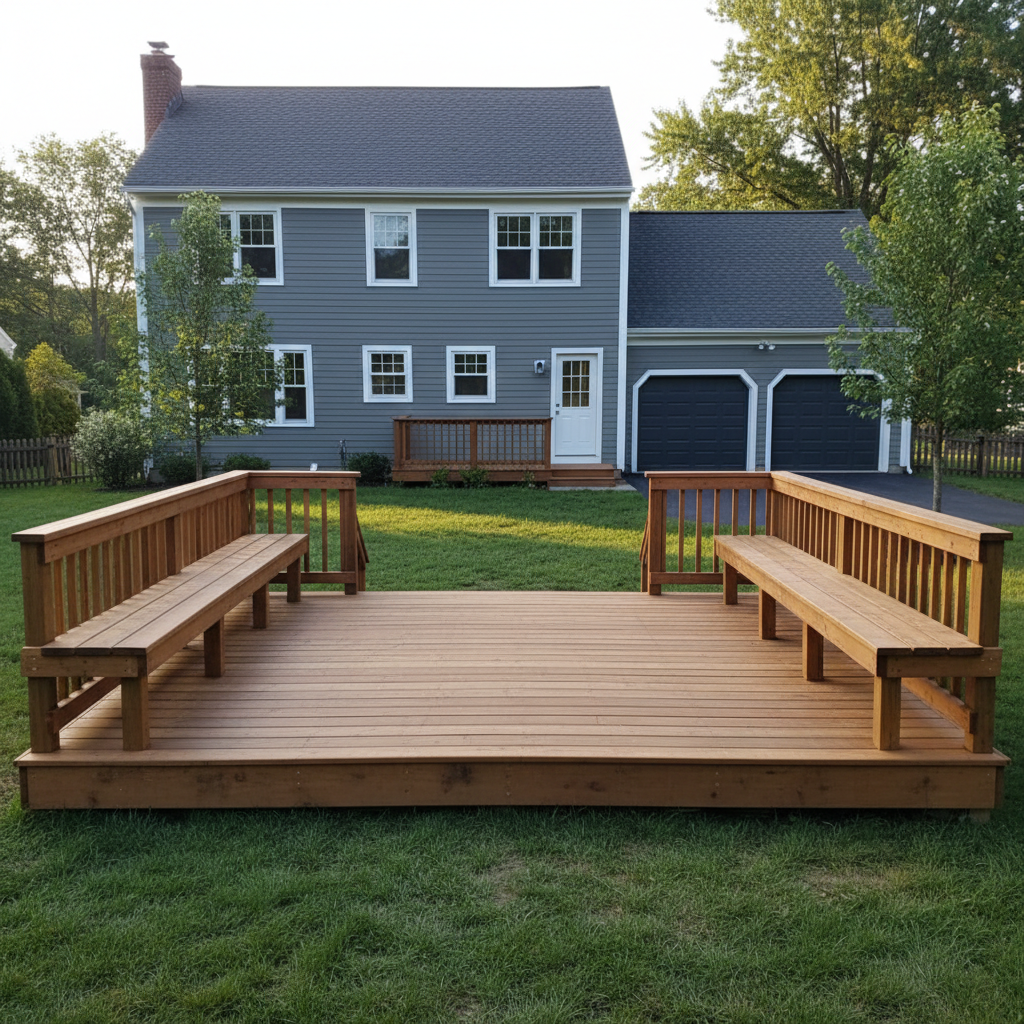
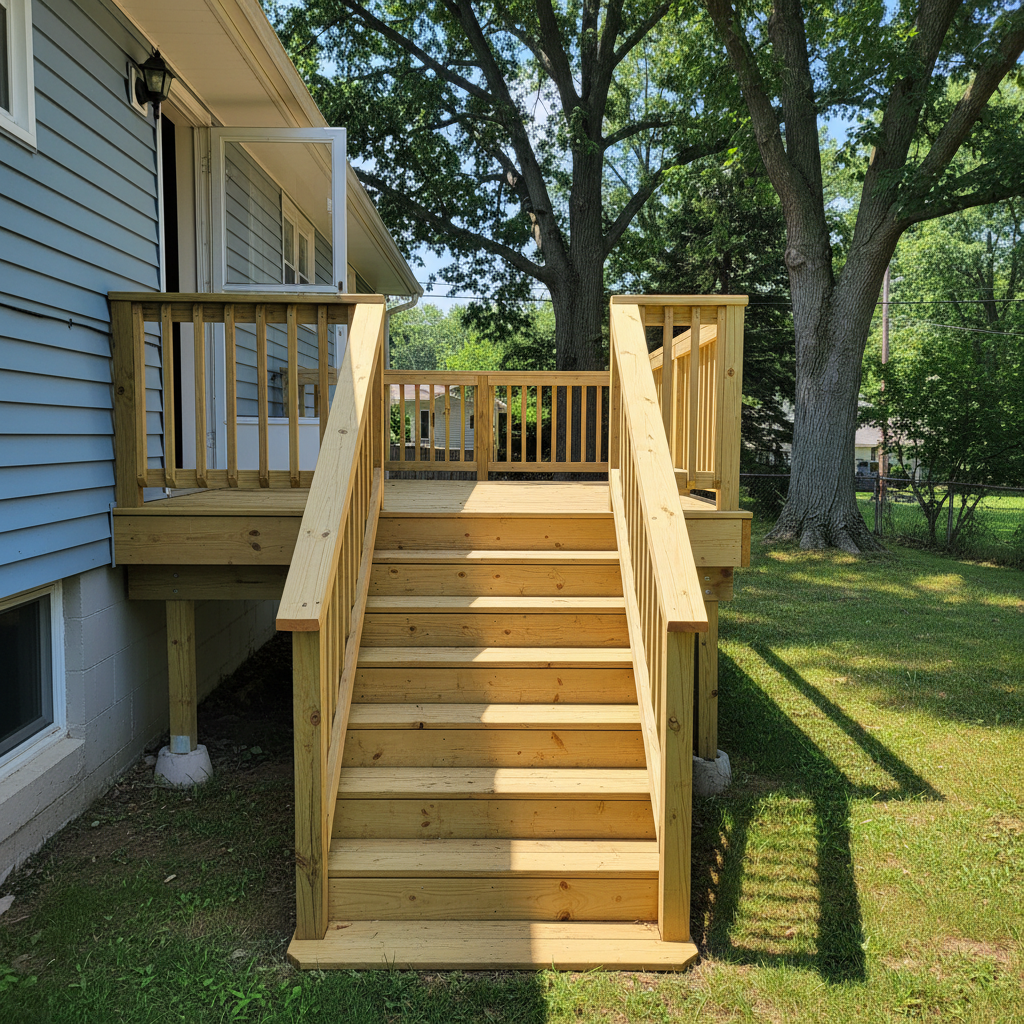
Every job below is one we do ourselves across Vestal.
We frame new decks with joist hangers rated for the lumber we use, galvanized for pressure-treated pine and stainless for cedar or composite boards over ACQ-treated frames. Footings go down below the frost line, which around Vestal means close to 42 inches, so the posts don't heave when the ground freezes and thaws. We can build off an existing ledger board or free-standing with its own beam if the house framing can't take the load.
Soft boards, a railing that's started to wobble, a ledger board pulling away from the house, that's most of what repair calls are about. We replace what's actually failed instead of tearing off boards that still have years left in them. If the frame underneath is sound, there's usually no reason to rebuild the whole deck to fix one bad spot.
We pressure wash the deck first to get the mildew and gray weathered wood off, then let it dry a couple of days before any stain goes on. Pressure-treated pine calls for this every two to three years; cedar holds up a little longer. We'll tell you if your boards are too far gone for stain to help, instead of selling you a coat that'll peel off in a year.
Multi-level decks, built-in benches, a pergola over part of the seating area, we'll draw it out before any lumber shows up. We take into account the slope of the yard, where the sun sits in the afternoon, and how the deck connects to the doors you've already got. This is also where we figure out footing placement, so the design and the structure match from the start.
Composite boards don't rot and skip staining entirely, but they still require a frame built correctly underneath, with proper joist spacing and hidden fastener systems so there's nothing to catch bare feet on. We install Trex, TimberTech and a few other brands and can walk you through color options that won't fade or get too hot to walk on barefoot in July.
Code around here calls for 36 inch railing on most residential decks, with baluster spacing tight enough that a 4 inch sphere can't pass through. We fix railings that have gone wobbly at the post connection, which is almost always a bad attachment to the rim joist, not a bad railing.
Sometimes the frame's solid and it's just the decking boards that have cupped, split or gone soft. We pull the old boards and resurface with new pressure-treated, cedar or composite decking without touching the joists underneath. It's a faster job than a full rebuild and a lot less expensive.
Stair stringers get overbuilt more than any other part of a deck, because they take the most direct impact and the most foot traffic. We cut stringers to hold proper rise and run, usually 7 inch rise and 10 inch tread, and anchor them so they don't shift away from the deck over a winter.
An old deck that's rotted past saving needs to come out clean, posts and footings included, before anything new goes in. We haul away the old lumber and hardware so you're not stuck with a pile of treated wood in the yard.
If you want the deck covered and screened instead of open to the weather, we can frame that in as an addition rather than a separate structure. It's a bigger job, roofing and screening on top of the deck framing, but it gets you outside space you can use when the bugs are bad.
Four steps, and no surprises in any of them.
You tell us what you want doing, we look at what is actually there, and we ask the awkward questions early.
In writing, itemised, free. If something might add cost later we flag it now rather than at the end.
Same crew throughout. We cover your floors, keep the dust down and tidy up before we leave each day.
You point out anything you are not happy with and we fix it before the invoice, not after.
Deck crews travel to most towns within about 50 miles of Vestal.
Questions that come up once a project's actually underway.
Describe the problem and we will tell you what it probably is. No obligation.